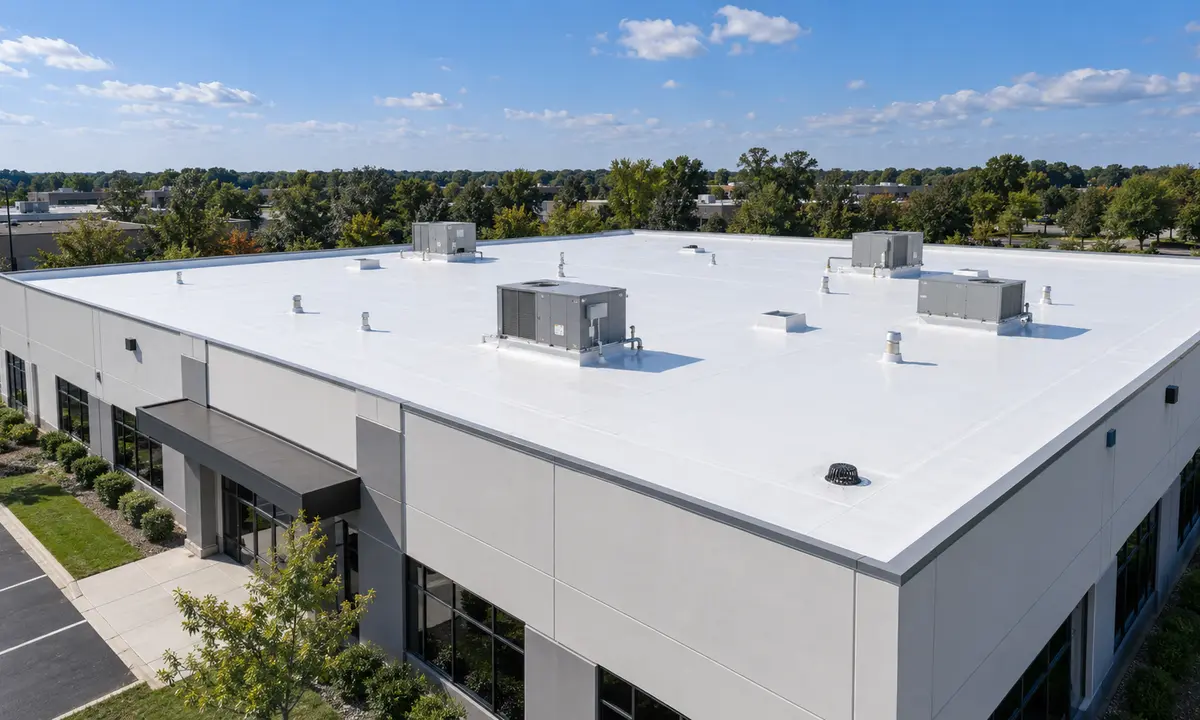
Find the entry point. Define the repair.
A commercial roof leak can begin at a seam, a flashing detail, a roof edge, or a drain assembly. Water may travel within the building before it becomes visible inside. We review the leak history and accessible roof conditions so the proposed work addresses the likely source and identifies any remaining uncertainty.
Commercial roof problems we investigate
- Open seams and punctures: localized membrane damage, separated laps, and the condition of previous patches.
- HVAC curbs and penetrations: corners, pipe boots, wall transitions, and flashing around rooftop equipment.
- Edges and terminations: loose edge metal, failed cover strips, coping details, and connections to walls.
- Drainage: blocked outlets, drain details, scuppers, gutters, and areas of standing water.
- Recurring leaks: nearby roof details and repair history, with further investigation proposed when the source cannot be established.
Repairs matched to the existing system
The roof material, surface condition, and existing warranty affect the repair scope. EPDM rubber roof repairs use compatible seam and flashing materials with the required preparation. TPO repairs commonly involve compatible membrane and heat-welded details. PVC, metal, and modified bitumen require their own system-specific approach. A generic coating or sealant is not a substitute for selecting the correct repair detail.
What happens after you contact us
- Describe the building and leak. Send the address, interior location, when the leak occurs, roof records if available, and a site contact.
- Review conditions. We investigate accessible areas and document observed defects. If concealed moisture or another building component may be involved, we explain the next investigation step.
- Approve the scope. Review repair locations, proposed work, price, exclusions, and any limits before authorizing work.
- Coordinate access and completion. Confirm scheduling, weather conditions, tenant considerations, and documentation for the agreed work.
When a patch may not be enough
A localized repair can be appropriate when the surrounding assembly is serviceable. Widespread seam failures, deteriorated flashing, wet insulation, or damaged decking may require a broader scope. An inspection cannot always establish concealed conditions; additional investigation may be needed before choosing a lasting solution.
Compare repair, restoration, recover, and replacement options and the factors that affect commercial roofing cost.
Roof repair for occupied properties
We work with offices, warehouses, retail buildings, apartments, HOAs, and other managed properties across Indianapolis and surrounding Central Indiana communities. Share roof access rules, vendor requirements, and areas that must remain accessible. Our property management roofing services help organize work by building and roof section.
Common questions
Can you help with an active commercial roof leak?
Call (317) 496-2741 to discuss the location, conditions, and current availability. Tell us whether temporary protection is needed. Scheduling and the type of work possible depend on roof access, weather, and conditions.
How much does a commercial roof repair cost?
Access, mobilization, roof type, the number of defects, flashing complexity, and concealed damage all affect cost. We provide pricing for a defined scope after reviewing the property; a price for one isolated patch does not represent every leak.
Can a roof under manufacturer warranty be repaired?
Share the warranty documents before work is authorized. Reporting procedures and restrictions on repairs must be checked with the warrantor. Any required approval or authorized-contractor involvement must be resolved before proceeding.
What if I do not know the roof material?
Send any roof records you have and describe the building. We can review the material during the assessment. You do not need to climb onto the roof to identify it.