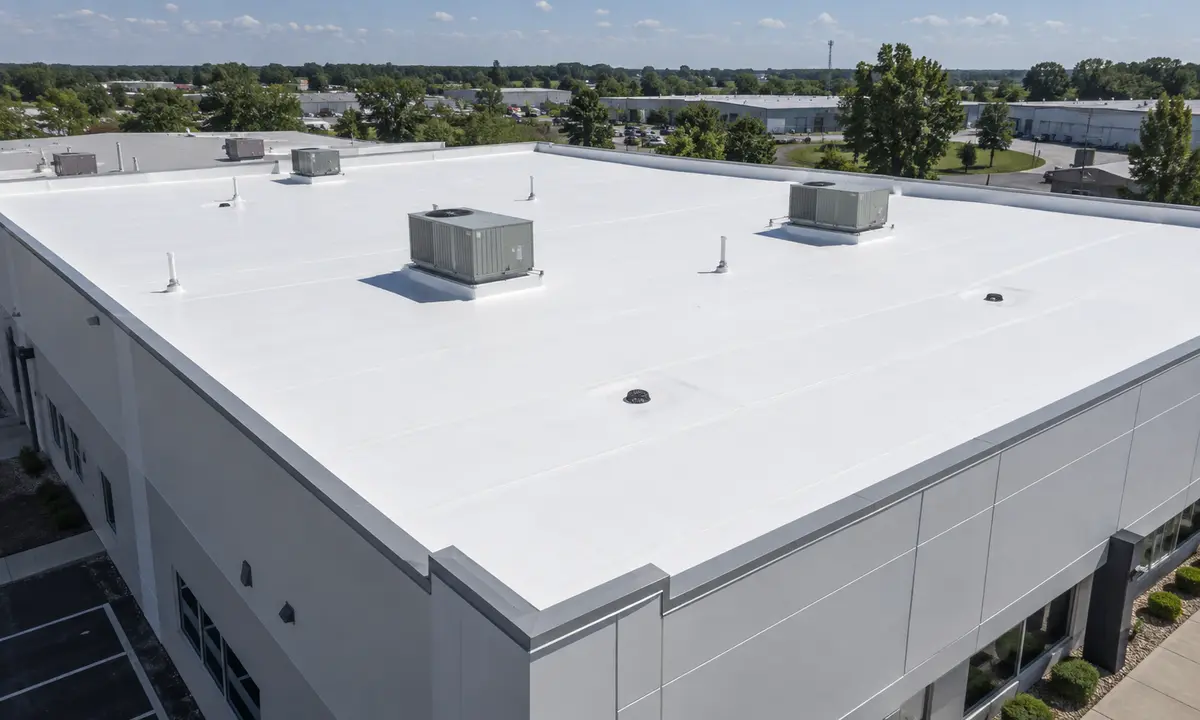
Flat and low-slope roofing in Central Indiana
Low-slope roofing must manage water across broad surfaces with fewer natural drainage advantages than a steep-slope roof. Membrane selection matters, but performance also depends on substrate condition, insulation, attachment, seams, edge details, penetrations, flashing, and drainage.
RedCorn Roofing works with low-slope systems on commercial buildings and on residential sections such as porches, additions, and other areas where shingles are not appropriate.
Common membrane systems
Details that deserve attention
- Open or stressed seams and membrane punctures
- Flashing around curbs, pipes, walls, and rooftop equipment
- Perimeter edge metal and termination details
- Drain, scupper, and gutter performance
- Ponding areas, insulation condition, and visible deck movement
- Transitions between membranes and steep-slope roofing
Repair, recover, or replacement
The right path depends on the existing assembly and the distribution of defects. A repair may restore a localized failure when the surrounding roof remains sound. A recover can sometimes provide a new system over a suitable existing assembly. Replacement allows damaged or unsuitable components to be removed and the full roof build-up to be addressed. RedCorn documents the condition and explains which options fit the property. For an existing leak or membrane defect, see our commercial roof repair assessment process.
TPO roof repair and replacement
For an existing TPO roof, describe whether the concern is a puncture, seam, curb, edge, or recurring leak. The assessment should consider the surrounding membrane and underlying assembly before defining a repair. For replacement, compare membrane thickness, attachment, insulation, coverboard, and perimeter details together.
EPDM rubber roofing
On an EPDM roof, seams, patches, penetrations, and wall flashings deserve a close review. Previous repairs and surface condition affect preparation and material compatibility. Ask what the proposed work addresses and whether any concerns remain outside the repair area.
PVC roofing
For a PVC roof, discuss the building’s use and any rooftop exhaust or chemical exposure as well as the roof condition. Material compatibility should be checked for the specific application. Existing warranty documents and roof records can help identify the system before repairs are planned.
Flat roofing for Indianapolis-area properties
RedCorn serves Indianapolis and surrounding Central Indiana communities. We work with commercial owners and property managers, as well as homeowners with low-slope additions or porch roofs. Share the address and roof concern to confirm project availability.
Need help choosing a scope? Compare commercial repair and replacement options or review whether an existing roof is a candidate for coatings.
Explore your roof system
TPO roofing and repair covers welds, attachment, insulation, and replacement specifications. EPDM roof repair explains seams, curbs, and compatible repair details. For a leak on any commercial system, start with commercial roof repair.
Flat roofing questions
Are TPO and PVC the same?
No. Both are commonly white thermoplastic membranes with heat-welded seams, but their material formulations and performance characteristics differ. The building use, existing system, chemical exposure, and project requirements can affect selection.
Can EPDM be repaired?
Many localized EPDM defects can be repaired when the membrane and surrounding assembly remain serviceable. Preparation, compatible materials, and correct seam and flashing procedures are essential.
Does ponding water mean the whole roof needs replacement?
Not automatically. Ponding can result from drainage, insulation, structure, or localized settlement. The cause and the condition of the surrounding system should be evaluated before deciding on the scope.